Ending homelessness in 10 years: following the $11.2 billion in Budget 2026
Ottawa's new budget pledges $11.2 billion over four years, and $17.8 billion more in later years, to end homelessness within a decade. The money is real, but most of it does not start until 2027-28, and much of the success depends on the provinces.
Rednwhite

The headline commitment in Budget 2026 is a bold one. Tabled on November 5 by Finance Minister François-Philippe Champagne, the budget says it “sets Canada on a path to end homelessness over the next decade.” On Friday, Prime Minister Mark Carney was in Winnipeg with Manitoba Premier Wab Kinew to promote that plan, according to The Canadian Press.
A goal that ambitious deserves a close look at the numbers behind it. Here is what the official documents actually say, and what Canadians should watch as the money starts to flow.
The headline number, read carefully
News coverage has summarized the plan as $11.2 billion over four years and $17.8 billion over ten. The budget’s own wording in Chapter 3 is more precise: “Budget 2026 proposes to provide $11.2 billion, over 4 years, starting in 2027-28, and $17.8 billion in future years.”
Two details in that sentence matter.
First, “starting in 2027-28.” The new money does not begin this fiscal year. It begins in the federal fiscal year that opens in April 2027. That is not unusual for a budget measure, but it means people sleeping outside this winter will not see the new funding.
Second, “proposes.” A budget is a plan. The money still has to be approved by Parliament, and much of it will flow through agreements with provinces and territories that have not yet been rewritten.
Where the money goes
The budget breaks the homelessness pillar into several pieces. Using the figures in Chapter 3:
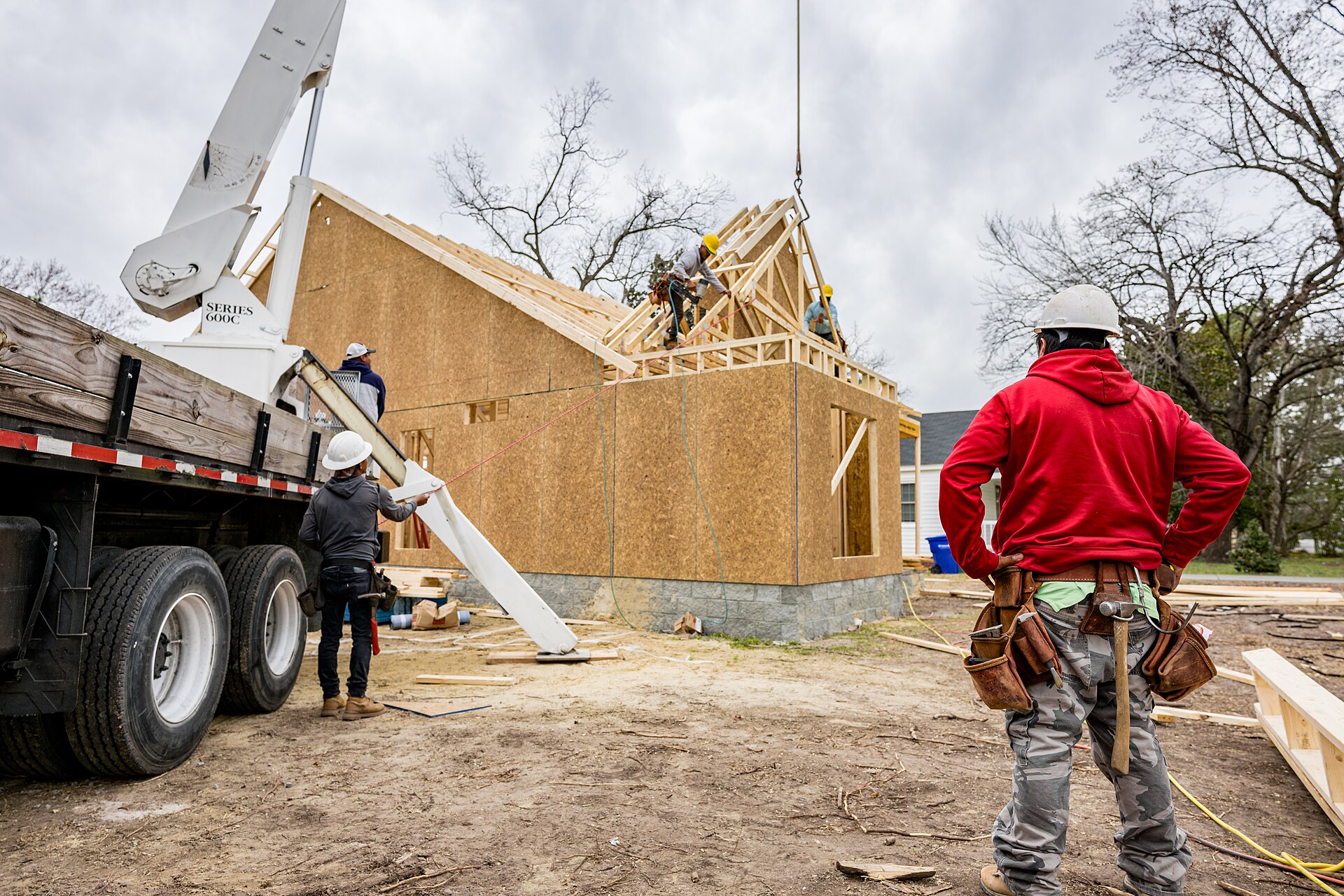
- Supportive and transitional housing, delivered through Build Canada Homes: $3.6 billion over four years from 2027-28, plus $6.4 billion in future years. Federal money covers the capital costs of building it.
- An Integrated Supports Fund, also through Build Canada Homes: $1.8 billion over four years from 2027-28, plus $3.2 billion in future years, for projects that combine housing with health, mental health, addictions and social supports.
- A Health Infrastructure Fund, part of the Build Communities Strong Fund: $2 billion over two years from 2027-28, for community mental health and addictions facilities.
- Reaching Home and the Veterans Homelessness Program: $2.1 billion over three years from 2028-29, plus $4.4 billion in future years, renewing both programs for 10 years.
- The Canada Housing Benefit: $1.7 billion over three years from 2028-29, plus $3.9 billion in future years, for direct monthly rental help to low-income Canadians.
The budget also gives a concrete example. In Winnipeg, it says, “Up to $800 million in capital will be provided to build 2,000 new transitional and permanent supportive housing units.”
The part that depends on someone else
The most important sentence in this section of the budget may be this one: “Federal funding will support capital costs, while provincial and territorial partners will be expected to fund ongoing operations and wraparound services, like job, training, income and health supports.”
In plain terms, Ottawa will help pay to build housing. The provinces and territories are expected to pay to run it and to provide the staff and services that help people stay housed. The budget says the bilateral housing agreements will be revised ahead of the Spring Economic Update 2027.
This is a reasonable division of labour on paper. Health care and social services are provincial responsibilities. But it means the 10-year goal is a shared one, and the federal budget alone cannot tell you whether it will be met. The provinces and territories each publish their own budgets, and each will have to show what it is putting toward the operating side.
Not everyone thinks the operating side is covered. Future of Good, which reports on Canada’s social sector, noted on budget day that the plan includes little new operating money for community agencies and leaves the Canada Social Transfer flat. Those agencies are often the ones doing the front-line work.
The bigger fiscal picture
This spending sits inside a larger budget. According to the economic and fiscal overview, the federal deficit is projected at $62.3 billion in 2026-27, $62.5 billion in 2027-28 (the year the homelessness money starts), and $52.9 billion by 2030-31. Federal debt is projected to stay at roughly 40% of GDP over that period.
The government’s argument is that much of its borrowing is for long-lived assets. The budget states that “the deficit is projected to be fully accounted for by capital investments in 2027-28 and each subsequent year.” Supportive housing is a good example of what that framing is meant to cover: a building that will serve people for decades.
What to watch
There is one line in Chapter 3 that should encourage anyone who cares about accountability: “Reaching Home will require rigorous reporting, including real-time data, as a condition for continued funding.”
That is the right instinct. A promise to end homelessness is only meaningful if Canadians can see, year by year, whether the number of people without homes is going down. Here is what we think is worth tracking over the next decade:
- Does the money arrive on schedule? The plan’s dollars start in 2027-28 and 2028-29. Compare future budgets and public accounts against these figures.
- Do the units get built? Winnipeg’s 2,000 units are a clear, countable target. Every other city should have one too.
- Do provinces and territories fund the operating side? Watch each provincial budget for matching commitments once the new agreements are signed.
- Is the data public? If Reaching Home will require real-time data from recipients, Canadians should be able to see a summary of it.
When Rednwhite begins publishing report cards, homelessness spending is exactly the kind of commitment we will follow across federal, provincial and municipal budgets. For now, the official documents are open to everyone. You can find Budget 2026, the Public Accounts of Canada and the federal fiscal updates in our federal budget directory, and Manitoba’s own budget and public accounts in our Manitoba directory.
Sources
- Department of Finance Canada — Budget 2026, Chapter 3: A more affordable life — November 5, 2026
- Department of Finance Canada — Budget 2026, Economic and Fiscal Overview — November 5, 2026
- Department of Finance Canada — Government of Canada releases Budget 2026: Masters of our destiny — November 5, 2026
- The Canadian Press via 650 CKOM — Champagne, Carney travelling across country to sell federal budget to Canadians — November 6, 2026
- Future of Good — Federal Budget 2026: Champagne’s budget targets affordability, sidesteps social sector workforce — November 5, 2026