
The Productivity Mega Deduction: the right idea, but Canadians deserve the receipts
Ottawa's new budget lets businesses write off far more of their investment right away, at an estimated cost of $36 billion over five years. Canada needs more business investment. It also needs a clear way to tell whether this costly bet pays off.
Rednwhite

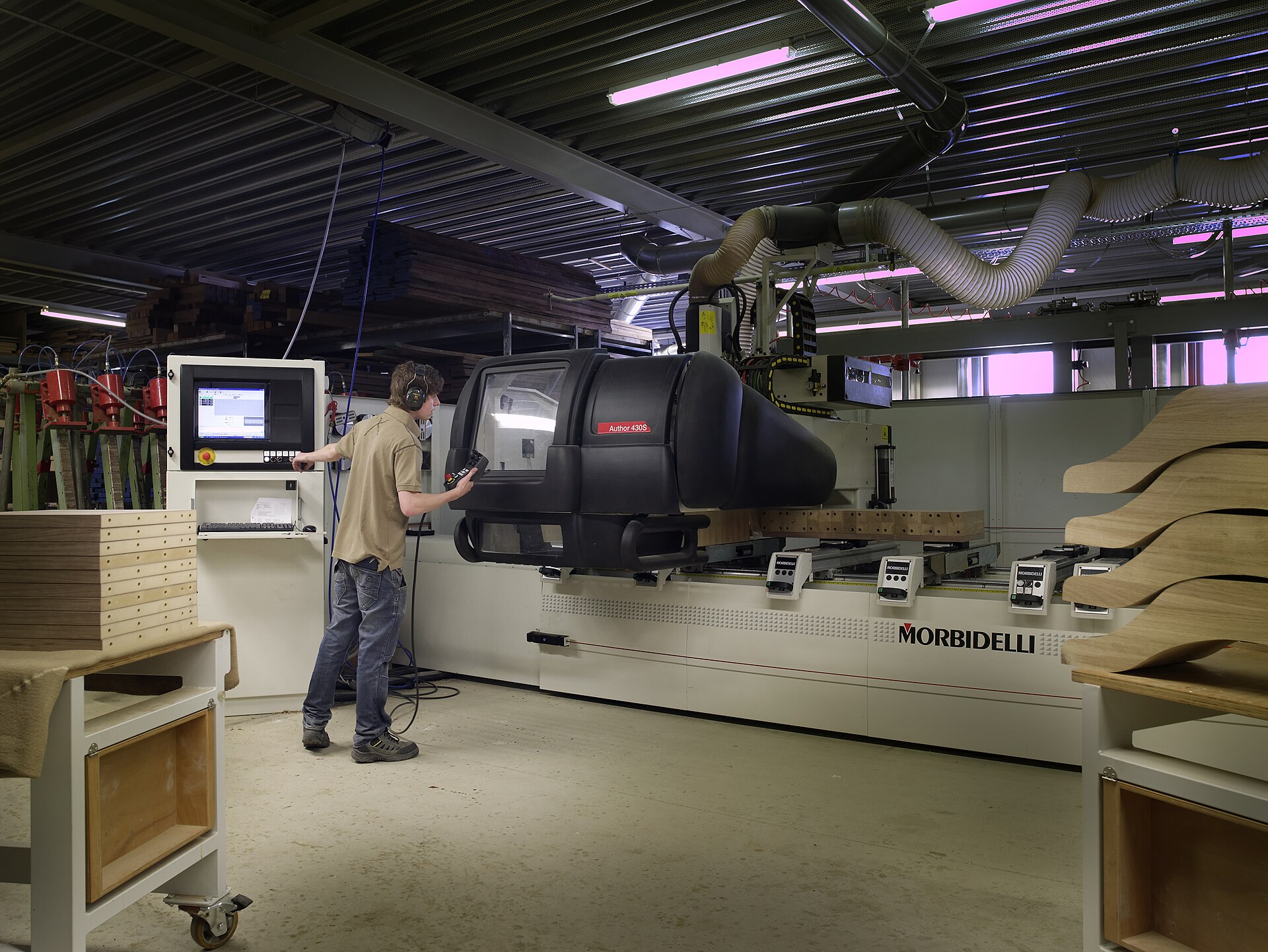
On Thursday, November 5, Finance Minister François-Philippe Champagne tabled Budget 2026, the second budget of Prime Minister Mark Carney’s government. It contains plenty to talk about. The biggest single tax measure in it gets less attention than it deserves: the Productivity Mega Deduction.
The name sounds like marketing, but the idea behind it is serious. We think the government is right to go after Canada’s weak business investment. We also think the way this measure is counted in the budget makes it harder, not easier, for Canadians to follow their own money. Both things can be true.
What the government decided
The measure lets businesses immediately write off the full cost of a much broader range of equipment and other capital assets, instead of deducting it slowly over many years. According to Chapter 1 of the budget, the assets covered represent more than 65% of business investment, and the change is described as permanent. The budget’s economic and fiscal overview says it would “permanently increase the amount of assets eligible for immediate expensing from roughly 15% of assets to more than 65%.”
The budget’s own examples are deliberately ordinary: restaurant equipment, farm tractors, excavators, railway track, studio equipment. Some things are left out, including certain long-lived buildings, intangibles and certain passenger vehicles. The Canada Revenue Agency will decide whether particular assets qualify once the legislation is tabled.
The measure was first announced in September. Budget 2026 confirms it and puts a price on it: an estimated $36 billion over five years, starting in 2026-27.
What it gets right
Canada has a real problem with business investment, and this measure takes it seriously.
The budget estimates that the change lowers the marginal effective tax rate on new business investment from 13.0% to 6.4%. That rate is a measure of how much tax eats into the return on a new machine or piece of equipment. For comparison, the budget puts the equivalent U.S. rate at 16.9%. For a company deciding which side of the border to build on, that gap matters.
The government’s budget home page says the measure “should expand Canada’s productive capacity by adding about $22 billion a year to GDP and supporting up to 80,000 jobs.”
There is a sound principle underneath. Businesses that buy productive equipment tend to make workers more productive, and more productive workers can earn higher wages. A tax system that rewards investment rather than penalizing it is a reasonable choice. It is also a simple one to explain: buy qualifying equipment, deduct the cost now. Simple rules are easier for a small farm or a family restaurant to use than a maze of targeted credits.
Credit where it is due: this is a pro-growth measure aimed at a long-standing weakness, and it is broad rather than picking a handful of favoured industries.
Where it falls short
The first concern is who benefits most. The budget’s own sector table shows the gains are uneven. The effective tax rate for agriculture and fishing falls from 7.6% to -6.0%, and transportation and storage from 13.3% to -2.3%. Retail trade moves only from 21.6% to 19.3%, and wholesale trade from 21.3% to 18.6%. That is not a scandal. Capital-heavy sectors buy more equipment, so they gain more from a rule about equipment. But it means the benefits land unevenly across the economy, and Canadians should know that going in.
The second concern is bigger, and it is about how the measure is counted.
Since Budget 2025, Ottawa has used what it calls a Capital Budgeting Framework. In the budget’s words, the framework “classifies federal expenses and tax expenditures as either capital investments or day-to-day operating spending.” The government’s headline fiscal promise is to balance day-to-day operating spending with revenues by 2027-28, a year ahead of schedule.
Here is the catch. The Productivity Mega Deduction is a tax break. It reduces what Ottawa collects. Yet in the budget’s chart of new capital investments, it is the single largest item. In other words, money the government chooses not to collect is being treated as an investment, on the same side of the ledger as a bridge or a hospital.
Economist Charles Lammam made this point in a piece published on November 6. By his count, the budget “labels $16.8 billion of that lost revenue as ‘capital investment’,” and “without that step, the operating budget runs a $5.6 billion deficit.” That is his calculation, not the government’s, but the underlying classification is set out plainly in the budget itself.
You can believe the Mega Deduction is good policy and still think this is the wrong way to present it. A tax cut that encourages investment is still a tax cut. If the main test of fiscal discipline is an operating balance, then what goes into that balance should be easy to understand and hard to argue about.
What it means for ordinary Canadians
Most Canadians will never claim this deduction. They will, however, pay for it, in the sense that $36 billion over five years is $36 billion that is not available for something else, or that adds to borrowing. Budget 2026 projects a deficit of $62.3 billion this fiscal year.
That does not make the measure wrong. Tax cuts that genuinely raise productivity can pay for part of themselves over time through a larger economy. The government’s case is that this one will. But “trust us, it will pay off” is a promise, and promises worth $36 billion should come with a way to check them.
What we would like to see
Three things would make this a better policy without changing its core:
- Report on it every year. Publish how much the deduction actually cost, which sectors claimed it, and whether business investment rose. The government has already set an expected result (about $22 billion a year in GDP and up to 80,000 jobs). Measure against it.
- Show the operating balance both ways. Present the operating balance with and without tax expenditures counted as capital, so Canadians can judge the 2027-28 promise for themselves.
- Name a review date. A permanent measure of this size deserves a scheduled, public look at whether it is working.
This is exactly the kind of question Rednwhite is being built to ask. When we begin publishing report cards, we will look at whether governments say clearly what a measure costs, what it is supposed to achieve and how they will know. On this one, the government has done the first two. The third is still to come.
Sources
- Department of Finance Canada — Budget 2026: Masters of our destiny (budget home page) — November 5, 2026
- Department of Finance Canada — Budget 2026, Chapter 1: Canada’s Investment Supercycle — November 5, 2026
- Department of Finance Canada — Budget 2026, Economic and Fiscal Overview — November 5, 2026
- Department of Finance Canada — Budget 2026 Key Measures — November 5, 2026
- Charles Lammam — Ottawa got a windfall—and spent nearly all of it in Budget 2026 — November 6, 2026
- The Canadian Press via 650 CKOM — Champagne, Carney travelling across country to sell federal budget to Canadians — November 6, 2026