A missing right whale calf, found in Quebec waters by Canadians who keep watching
Researchers from a Quebec non-profit photographed a North Atlantic right whale calf that had slipped past every survey this year. The find makes this the best calving season since 2009, and it says something good about how Canada looks after its waters.
Rednwhite

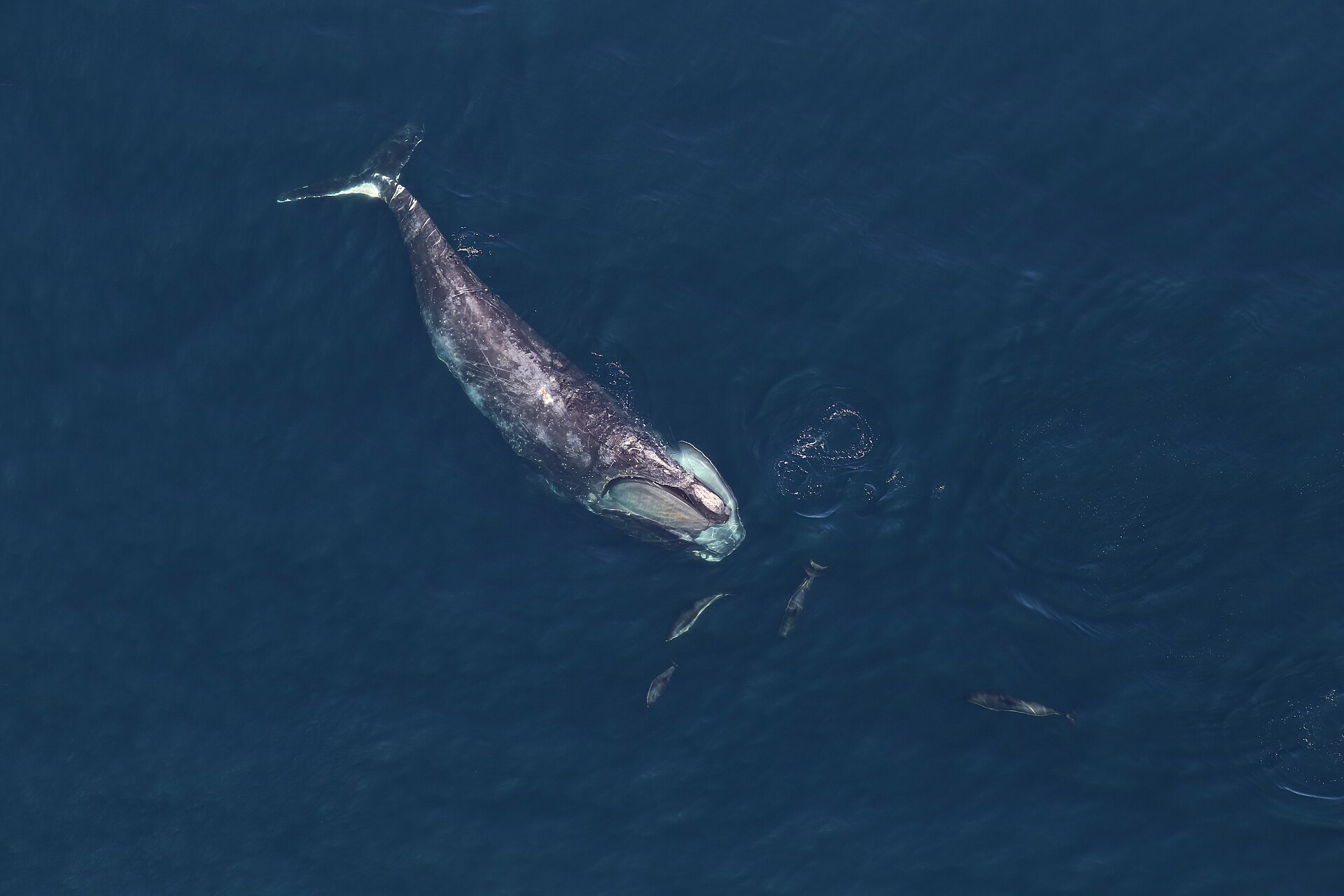
There are only about 380 North Atlantic right whales left in the world. So when one more turns up that nobody knew existed, it is news. And this week, the news came out of the Gulf of St. Lawrence, thanks to a small group of Canadian researchers who never stopped looking.
On November 6, The Associated Press reported that a previously unidentified right whale calf had been photographed off Anticosti Island, Quebec. Scientists at the New England Aquarium in Boston have now concluded the calf was most likely born months earlier and simply went unseen.
What happened
The calf was spotted by the Mingan Island Cetacean Study, a Quebec non-profit research organization. Its research station is in Longue-Pointe-de-Mingan, on the Côte-Nord. The AP says the photographs were taken in September; one, credited to the Mingan Island Cetacean Study, shows mother and calf in the Jacques-Cartier Passage of the Gulf of St. Lawrence on September 25, 2026.
The calf was swimming with its mother, a 38-year-old whale known to researchers as Silt (catalogue number 1817). According to the AP, Silt was briefly seen at the right whales’ calving grounds off the southeastern United States in February, but not documented with a calf. Boat and aerial surveys along the U.S. East Coast through the spring and summer also missed the youngster. By the time Canadian researchers photographed it, the calf weighed roughly 15,000 pounds.
“It just goes to show you how big the ocean is, and how those animals can get lost out there,” Richard Sears, the founder and director of the Mingan Island Cetacean Study, told the AP.
Amy Warren, a scientist at the New England Aquarium, put it simply: “This is an exciting discovery for us so late in the year.”
Why one calf matters so much
Right whales are among the rarest large animals on Earth. The AP reports that only about 70 reproductive-age females remain, and that the population lost about a quarter of its numbers between 2010 and 2020. In 2018, no calves were born at all.
This new calf brings the count from the most recent birthing season to 24. That is the highest total since 2009 and the fourth-highest on record. In a species this small, every calf that survives is a meaningful step back from the edge.
The threats are well known: collisions with ships, entanglement in fishing gear, and warming oceans that, the AP notes, have pushed whales outside of protected areas.
The quiet work behind the photo
Spotting one calf in a gulf this size is not luck. It is the product of people going out on the water, season after season, photographing individual whales and matching them against a catalogue. That is how a whale like Silt can be recognized by her markings, and how scientists can tell that the animal beside her has never been recorded before.
It is worth noticing who did this. Not a large agency with a fleet of ships, but a non-profit working out of a small coastal community on Quebec’s North Shore, on what the organization itself acknowledges is Nitassinan, the ancestral and unceded territory of the Innu people. Canada has a long tradition of that kind of patient, citizen-rooted science, and this week it paid off.
A country that chose to make room for a whale
The calf was found in waters where Canada has asked a lot of the people who make their living there.
In a March 2026 announcement, Fisheries and Oceans Canada and Transport Canada confirmed that 2026 would be the tenth consecutive year of vessel traffic measures to protect right whales in the Gulf of St. Lawrence. Those measures include a mandatory 10-knot speed limit for vessels 13 metres and longer across more than 65,000 square kilometres of the Gulf, and slowdowns in the main shipping lanes when a whale is detected. Fishing areas are closed when and where right whales are spotted. Aircraft and underwater acoustic gliders help find them.
These rules are not free. They slow down shipping and close fishing grounds that families depend on. Yet the government reports that in 2025, compliance with the mandatory vessel measures was over 99%, and close to 75% for a voluntary slowdown in the Cabot Strait.
That is a remarkable number. It means captains, crews and harvesters across Atlantic Canada and Quebec have, overwhelmingly, done what was asked of them. The March release quoted Joanne Thompson, the federal Minister of Fisheries: “We can protect this whale and support our harvesters.” Whether or not every fisher agrees with every closure, the compliance figures suggest most of them have accepted the bargain.
No one can say that any single rule saved this particular calf. But when a mother and her young are found feeding safely in a part of the Gulf that Canada has worked hard to make safer, it is fair to feel that the effort is worth it.
What Canadians can take from this
There is a lot of bad news about the natural world, and right whales have been part of it. This week’s story is a reminder of a few things Canadians do well:
- We value careful, long-term science, including the work of small non-profits that do much of the watching.
- We are willing to make trade-offs. Shipping companies and fishing communities have accepted real costs to protect a species most Canadians will never see.
- We share the work. The calf was found by Canadians and identified with help from American colleagues. Conservation of a migratory whale only works across borders.
One calf will not save a species. Twenty-four in a season, the best in more than 15 years, is the kind of trend that gives people reason to keep going. Somewhere in the Gulf of St. Lawrence this autumn, a 15,000-pound baby whale is proof that it is not too late.
Sources
- The Associated Press via Bangor Daily News — Scientists discovered an unknown baby right whale off Canada. They say it’s a cause for joy — November 6, 2026
- The Associated Press via ClickOnDetroit — Scientists discovered an unknown baby right whale off Canada. They say it’s a cause for joy — November 6, 2026
- Fisheries and Oceans Canada — Canada continues strong protections for endangered North Atlantic right whales — March 26, 2026
- Mingan Island Cetacean Study — Home page — accessed November 6, 2026