Looking Back: Provinces and Territories, Hits and Misses, July 2025 to October 2026
Most of the services Canadians use every day are run by provinces and territories. Looking back over the past fifteen months, here are the decisions that deserve credit, the ones that deserve criticism, and what they mean for you.
Rednwhite

Our last post went up in July 2025. Since then, provincial and territorial governments have made some of the most important money decisions in the country. They run health care, schools and much of social services. When their budgets wobble, you feel it.
This look back, written now, covers July 2025 to October 2026. It is not a complete list. We picked decisions from several regions that show a clear lesson, good or bad. Where we link to a province or territory’s budget page, that is our directory of the official documents.
The hit everyone shares: a national trade deal
On November 17, 2025, the provinces, territories and federal government signed the Canadian Mutual Recognition Agreement. The idea is simple: if a product can legally be sold in one province, it should not need fresh testing or approval to be sold in another. British Columbia led the effort.
B.C. minister Ravi Kahlon called it “the largest set of red tape reduction in Canada’s history, and it’s just the beginning.” Food was not included at signing, and the hard work on services and labour is still ahead.
Still, this deserves real credit. It should make it easier for businesses to sell across the country, and it showed every government in Canada working toward the same goal.
The West: hard choices in B.C. and Alberta
British Columbia. On February 17, 2026, B.C. tabled a budget with a record $13.3 billion deficit for 2026-27, up 38% from the year before. It raised the lowest income tax rate to 5.6%, with credits to protect some lower earners. It forecast the public sector shrinking by 15,000 full-time employees over three years, and delayed several long-term care homes and phase two of the Burnaby hospital.
Finance Minister Brenda Bailey called it “serious work for serious times.” The credit: B.C. stopped pretending the deficit would fix itself. The criticism: delaying long-term care beds pushes costs onto seniors and families who are already waiting. See the B.C. budget page.
Alberta. In October 2025, teachers went on strike on October 6 over pay and working conditions. On October 28, the legislature passed Bill 2, the Back to School Act. It imposed a contract, ordered teachers back, banned strikes until August 31, 2028, and pre-emptively used the Charter’s notwithstanding clause to shield the law from court challenges.
Getting students back into classrooms mattered. But using the notwithstanding clause before any court had ruled is a serious step. It takes a question about Charter rights away from the courts. The teachers’ association filed a legal challenge on November 6, 2025. A year on, CTV News described the law as still “a deep wound” for teachers. See the Alberta budget page.
The Prairies: steady hands, mixed results
Saskatchewan. The March 18, 2026 budget projected an $819 million deficit, with gross debt rising from $38.3 billion to $43.5 billion. It plans to shrink the public workforce by 3% over two years through retirements and departures, not layoffs. It also budgeted oil revenue at $59 a barrel when the market price was around $98.
That conservative oil price is a quiet hit. Planning low means a windfall becomes a bonus, not a hole. The miss is the rising debt. See the Saskatchewan budget page.
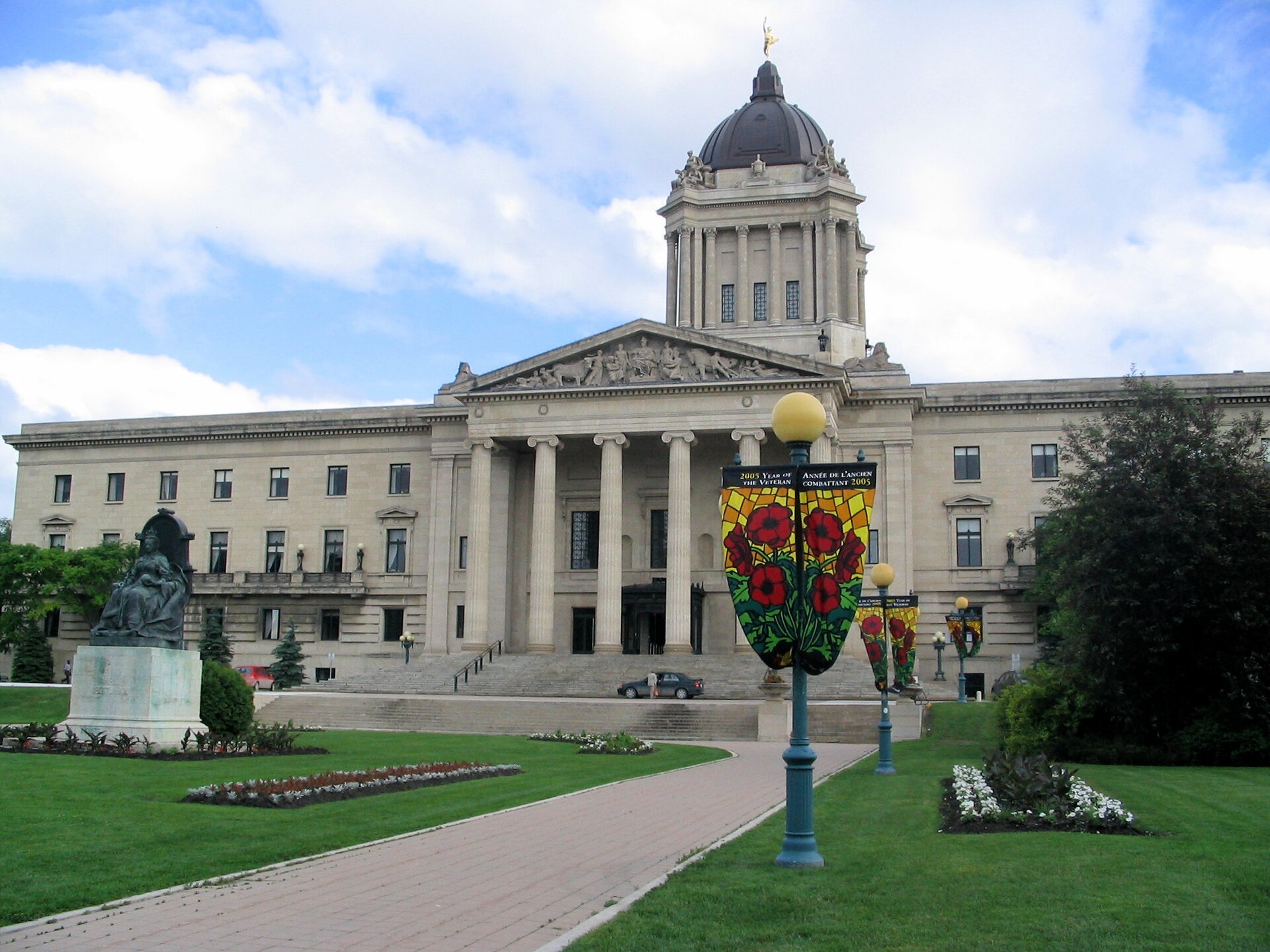
Manitoba. The March 24, 2026 budget projected a $498 million deficit, and removed the provincial sales tax on all groceries from July 1, at an estimated $32.2 million a year. It eliminated child care fees for about 3,500 low-income families and funded a new $75 million fire base in Thompson after the 2025 wildfire season.
The child care and wildfire spending are well targeted. The grocery tax cut is popular and affordable, but it helps all shoppers rather than just those who need it most. See the Manitoba budget page.
Central Canada: Ontario’s slipping target, Quebec’s U-turn
Ontario. The March 26, 2026 budget spent $244.2 billion with a $13.8 billion deficit, and pushed the return to balance back a year. It cut the small business tax rate from 3.2% to 2.2% for three years. By October 29, the fall update had raised the deficit to $16.9 billion, citing U.S. tariffs, higher gas prices and weaker income and land transfer tax revenue, and moved balance to 2029-30.
Ontario faces real trade damage that it did not choose. But a balance date that keeps moving is a warning sign. See the Ontario budget page.
Quebec. On October 25, 2025, Quebec passed its own Bill 2, a special law tying part of doctors’ pay to patient targets and allowing fines of up to $500,000 a day for “concerted action” against it. After weeks of conflict, the government reached a deal with family doctors, and on December 19, 97% of them voted for it. The deal removed the threat of heavy fines and offered incentives to take on 500,000 new patients by June 2026. The health minister resigned.
The goal, more Quebecers with a family doctor, was right. Trying to force it through a special law was not, and it cost months. The credit goes to changing course. See the Quebec budget page.
Atlantic Canada and the North: listening, overruns and planning ahead
Nova Scotia. The 2026-27 budget projected a deficit of about $1.2 billion and reduced or eliminated more than 280 grants to save about $130 million. Cuts hit scholarships, the arts, and programs for Mi’kmaw and African Nova Scotian communities. On March 10, the province reinstated $53.6 million for disability, seniors’ and education programs. “Nova Scotians have spoken. We listened,” said Premier Tim Houston.
Reversing course in public takes some humility, and that deserves credit. But cuts that have to be partly undone within weeks were not thought through. See the Nova Scotia budget page.
New Brunswick. The March 17, 2026 budget projected a $1.4 billion deficit, the largest in the province’s history, driven by a 17.4% increase in health spending. It planned about 1,400 fewer civil service positions and a highway toll near the Nova Scotia border from 2028. By August, the projected deficit had grown to $1.66 billion. Investing in health is defensible. Missing the target within one quarter is not a good sign. See the New Brunswick budget page.
Northwest Territories. The February 5, 2026 budget kept spending growth under one per cent and raised the emergency reserve to $210 million. Cabin Radio reported a projected surplus of about $20 million. Finance Minister Caroline Wawzonek said the larger reserve “better reflects the trend of the last several years of emergencies.” Setting money aside for bad years before they arrive is a clear hit. See the Northwest Territories budget page.
What it means for you
Across the country, the same pattern shows up: bigger deficits, rising debt, and promises of balance a few years away. The best decisions were the ones that planned for bad news, like Saskatchewan’s oil forecast and the N.W.T.’s reserve. The worst were the ones forced through and then walked back.
Rednwhite is being built to follow these numbers in every province and territory. Until our report cards launch, you can find each government’s official budget documents in our budget directory.
Sources
- Global News — B.C.-led agreement removes interprovincial trade barriers, not food, alcohol — November 19, 2025
- CFJC Today / The Canadian Press — B.C. hikes tax rate as budget delivers record $13 billion deficit — February 17, 2026
- ABlawg (University of Calgary) — Back to school, notwithstanding the Charter — October 30, 2025
- Alberta Teachers’ Association — ATA launches legal challenge against Bill 2 — November 18, 2025
- CTV News Edmonton — Back-to-work legislation still a ‘deep wound’ for Alberta teachers waiting for classroom improvements — October 27, 2026
- The Nugget — Explained: Alberta’s use of the notwithstanding clause to end teachers’ strike — October 31, 2025
- CP24 — Saskatchewan reports $819M deficit for 2026-27 — March 18, 2026
- CP24 / CTV News — Manitoba budget removes PST on groceries, reporting $498M deficit for 2026 — March 24, 2026
- Global News — Ford government runs deeper deficit, punts budget balance amid pessimistic outlook — March 26, 2026
- BNN Bloomberg — Ontario deficit grows to $16.9 billion as trade war with U.S. drags on — October 29, 2026
- Global News / The Canadian Press — Quebec adopts special law on doctors’ pay — October 25, 2025
- National Newswatch / The Canadian Press — Quebec doctors vote in favour of deal, premier names new health minister — December 19, 2025
- Global News — Backlash over Nova Scotia budget cuts — March 2, 2026
- Government of Nova Scotia — $53.6 million in grants funding reinstated — March 10, 2026
- CP24 — N.B. government looks to highway tolls, civil service cuts to combat $1.4B deficit in 2026-27 budget — March 17, 2026
- BNN Bloomberg — Historic annual N.B. deficit grows by $260 million in new fiscal update — August 27, 2026
- Government of the Northwest Territories — GNWT releases Budget 2026-2027 — February 5, 2026
- Cabin Radio — NWT, ‘expecting a lot’ in 2026, unveils budget for the year ahead — February 5, 2026