Looking Back: The Big Money Decisions Ottawa Made, July 2025 to October 2026
Our blog has been quiet since July 2025. Looking back over the past fifteen months, here are the federal money decisions that mattered most, what they got right, what they got wrong, and what they mean for your household.
Rednwhite


Our last post went up in July 2025. A lot has happened to the federal books since then. This is a look back, written now, at the biggest federal money decisions from July 2025 to the end of October 2026.
We have tried to be fair. Every one of these decisions had a real reason behind it, and every one has real costs. Our job is to help ordinary Canadians see both.
Ottawa tabled its second fall budget, Budget 2026, on November 5, 2026. This post stops just before it and covers the decisions that shaped where we were going into that budget. For Budget 2026 itself, see our pieces on the Productivity Mega Deduction and the $11.2 billion homelessness plan.
If you want the official documents themselves, our federal budget directory links to them.
Budget 2025: a new way of counting
Finance Minister François-Philippe Champagne tabled Budget 2025 on November 4, 2025. It also changed the calendar: the government says future budgets will be presented in the fall.
The headline number was a deficit of $78.3 billion for 2025-26, nearly double the $42.2 billion forecast a year earlier. The budget projected it would shrink to $56.6 billion by 2029-30.
The bigger change was in how that deficit is presented. The budget split spending into two piles: capital (things that last, like infrastructure and homes) and operating (day-to-day costs like salaries, transfers and programs). The government’s goal was to balance the operating side by 2028-29 and borrow only for capital. (Budget 2026 later said Ottawa is on track to do it in 2027-28, a year ahead of schedule.)
Alongside that came big commitments over five years: $115 billion for infrastructure, $30 billion for defence, and $60 billion in savings from a spending review. The government also said it expected to meet NATO’s 2% defence spending commitment that year.
What it got right. Separating investment from day-to-day spending is a reasonable idea. Households do it too: a mortgage is not the same as a grocery bill. And a budget that admits savings are needed, rather than pretending they are not, deserves some credit.
What it got wrong, or at least left open. A split like this only works if the line between “capital” and “operating” is drawn honestly. The Parliamentary Budget Officer has previously said Ottawa’s definition of capital inflates capital spending by nearly $100 billion over six years. Critics worry that ordinary spending could be relabelled as investment. That is a fair worry, and it is exactly the kind of thing independent scrutiny should keep an eye on.
Build Canada Homes: a builder, not just a funder
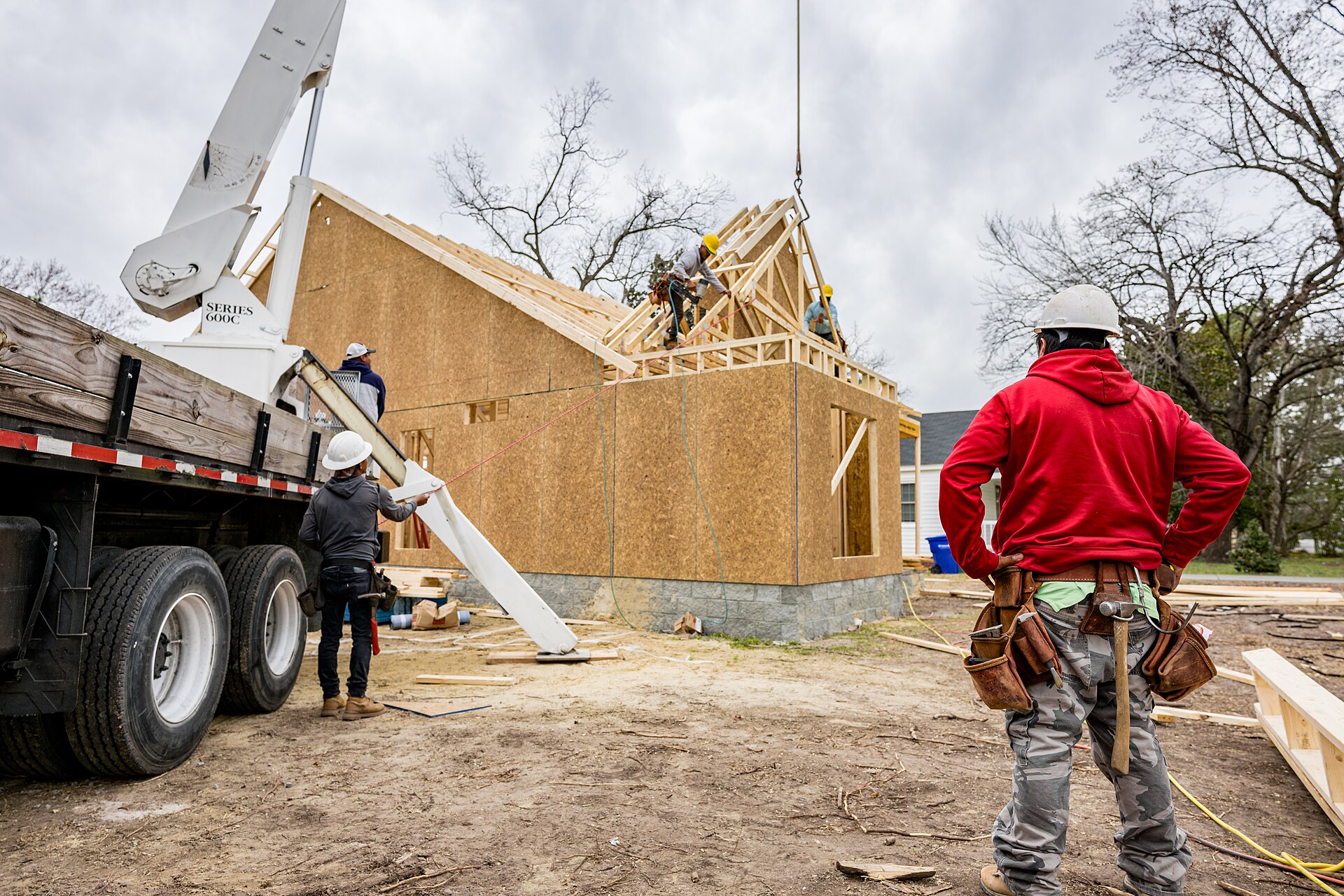
On September 14, 2025, the government launched Build Canada Homes with an initial $13 billion. It is led by Ana Bailão, a former Toronto deputy mayor. Its first plan covers 4,000 homes on six federally owned sites, plus a $1 billion fund for transitional housing.
Prime Minister Mark Carney put the problem plainly: “The core challenge present in the housing market is it’s just too hard to build.”
The credit. Using land the government already owns is sensible. So is betting on faster, modern construction methods. It is a direct attempt to add supply, which is what most housing economists say Canada needs.
The caution. Four thousand homes is a start, not a solution. The test will be how many homes are actually finished, at what cost, and how quickly. Those are numbers worth tracking year after year.
Help at the till and at the pump
Two cost-of-living measures followed the budget, both aimed at prices Canadians feel every week.
The grocery benefit. On January 26, 2026, the Prime Minister announced the Canada Groceries and Essentials Benefit: a 25% increase to GST credit payments for five years, plus a one-time 50% top-up in 2026. The government said more than 12 million Canadians would be eligible. For a family of four, that meant up to $1,890 in 2026, up from $1,100. At the time, food prices were up 5% from a year earlier.
This was a well-targeted choice. The GST credit already goes to lower-income households, so the money reaches people who need it most without building a new program from scratch.
The fuel tax pause. On April 14, 2026, with gas prices climbing after shipping through the Strait of Hormuz was largely halted, the government suspended the federal fuel excise tax from April 20 to September 7. That is about 10 cents a litre on gas and 4 cents on diesel. The Prime Minister called it “a responsible, temporary measure.”
On September 2, it was extended through January 31, 2027, with half the tax returning on February 1 and the full tax by April 1, 2027. The total cost for 2026-27 is $5.3 billion in lost federal revenue.
Here we are more sceptical. Fuel tax cuts help everyone who buys fuel, including people who do not need help, and the drivers who use the most fuel get the most money. A “temporary” measure that keeps being extended also gets harder to end. The grocery benefit is the better-designed tool of the two.
The spring update: better than feared, still big
On April 28, 2026, the government tabled a spring economic update. The 2025-26 deficit came in at $66.9 billion, well below the $78.3 billion forecast, largely thanks to better-than-expected revenue.
The update also cut the CPP contribution rate from 9.9% to 9.5% starting in January, which the government estimated at about $133 a year for someone earning $70,000. It set aside $5.9 billion over five years to recruit and train 80,000 to 100,000 new Red Seal trades workers.
A smaller deficit than forecast is good news. But economist Livio Di Matteo, writing in The Hub, made a fair point: beating a forecast is not the same as discipline when the forecast was high to begin with. He also noted that debt charges are projected to rise from $54 billion in 2025-26 to $81 billion by 2030-31. That is money spent on interest rather than on services.
Where things stood in October
Going into the fall, the budget watchdog was less optimistic than Ottawa. The PBO projected deficits still above $63 billion in 2030-31, against Ottawa’s April projection of $53 billion. It also said Ottawa was set to miss its own target of a falling deficit-to-GDP ratio.
What it means for you
Put simply: over these fifteen months, Ottawa chose to borrow heavily to build, to defend, and to cushion households from price shocks. Some of those choices were well aimed, especially the grocery benefit and the focus on building homes on public land. Others, like the open-ended fuel tax pause, cost a lot for uncertain benefit.
The bigger question is whether the new capital-versus-operating framework will be used honestly. That will decide whether today’s borrowing really pays for things that last.
This is exactly the kind of question Rednwhite is being built to answer. When our report cards launch, we will look at whether governments did what they said they would with the money. Until then, you can read the source documents yourself in our federal budget directory.
Sources
- The Hub — Champagne sets Nov. 5 budget date as watchdog warns deficits are deepening — October 21, 2026
- Department of Finance Canada — Budget 2025 — November 4, 2025
- CP24 / The Canadian Press — Federal budget forecasts $78B deficit as Liberals shift spending to capital projects — November 4, 2025
- BNN Bloomberg / The Canadian Press — Carney government launches Build Canada Homes with $13B initial investment — September 14, 2025
- BNN Bloomberg — Carney unveils boost to GST credit as Parliament resumes — January 26, 2026
- BNN Bloomberg — Carney government to temporarily suspend federal gas tax starting next week — April 14, 2026
- BNN Bloomberg — Carney government to extend gas tax holiday into the new year — September 2, 2026
- BNN Bloomberg / CTV News — 7 takeaways for Canadians from PM Carney’s spring economic update — April 28, 2026
- The Hub — Canada’s $66.9 billion deficit: Breaking down the big numbers in Carney’s fear-fuelled spring economic update — May 1, 2026